
The quiet beauty of the night sky continues to inspire artists. Within Judaism, the monthly ritual of Kiddush Levana—the blessing of the new moon—captures a moment when faith, time, and the natural world come together. Although the ritual itself takes place outdoors beneath the night sky, its symbolism and spiritual themes also find expression in Jewish art. From early to modern times, the Jewish ritual of blessing the new moon was a popular subject. Let’s explore Kiddush Levana, blessing the new moon in Jewish art, from early to modern times.
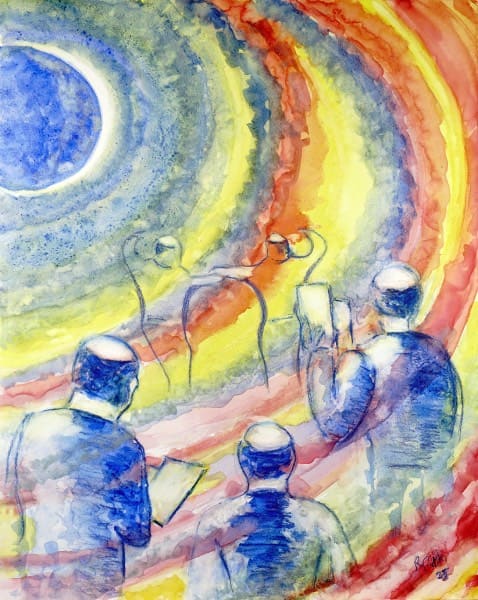
What is Kiddush Levana?
Kiddush Levana is a Jewish ritual blessing recited when the new moon becomes visible. The name actually means Sanctification of the Moon. Performed after Shabbat ends, it is a short series of prayers said outdoors at night while the sliver of the moon shines overhead. Just as the moon wanes and returns each month, the ritual reminds Jewish communities of renewal and endurance throughout history. We thank God for the renewal of the lunar cycle as we look forward to a new month.
Blessing the New Moon in Jewish Art: 15th-17th Century
Kiddush Levana Art in Early Manuscripts, Woodcuts, and Engravings
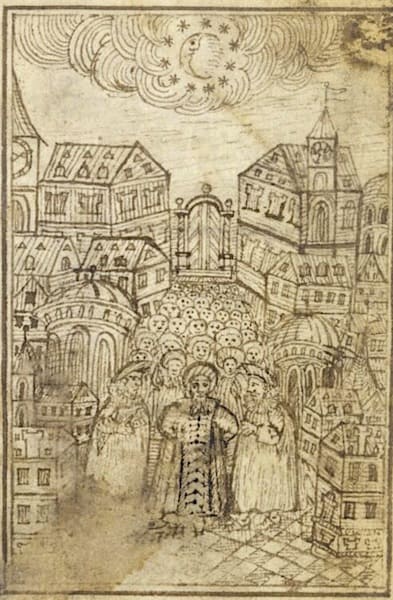
From the 15th to 17th centuries, we find Kiddush Levana art in early manuscripts, woodcuts, and engravings. Italian liturgical writings frequently show a silver crescent moon. The moon is sometimes anthropomorphized. Woodcuts appeared in Jewish books showing people standing outside, dressed in fine clothing. Stars shine around the moon, linking Kiddush Levana to the close of the Shabbat.





Blessing the New Moon in Jewish Art: from the 19th Century Onward
Realistic to Abstract Paintings of Kiddush Levana
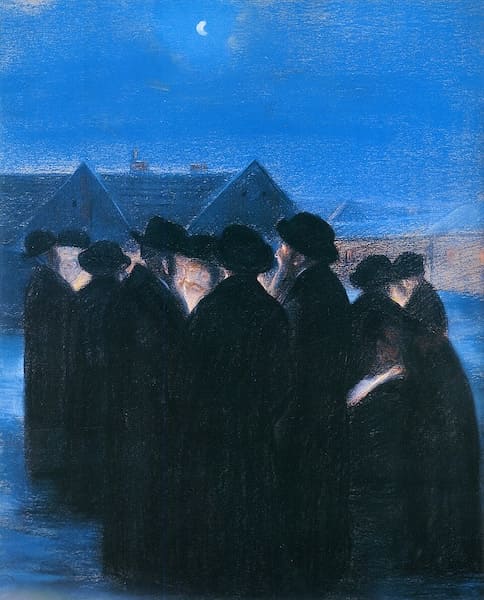
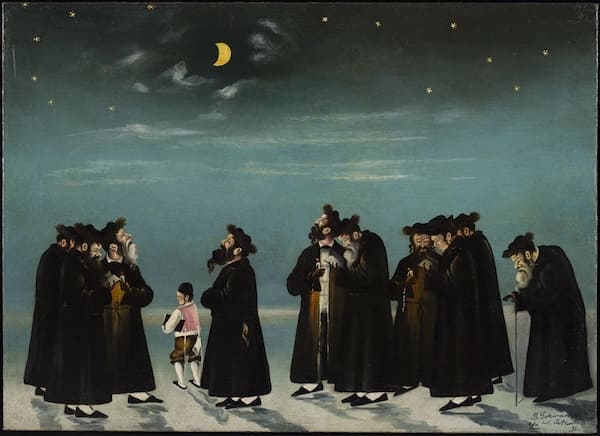
From the 19th century onward, blessing the new moon in Jewish art appears more frequently, reflecting both continuity of ritual and changing cultural contexts. Artists portray small groups gathered outdoors under a night sky, often emphasizing the quiet spirituality and communal intimacy of the moment. In Eastern European scenes, we find figures wrapped in prayer shawls, gazing upward, while later Western artists incorporated more stylized or symbolic elements.
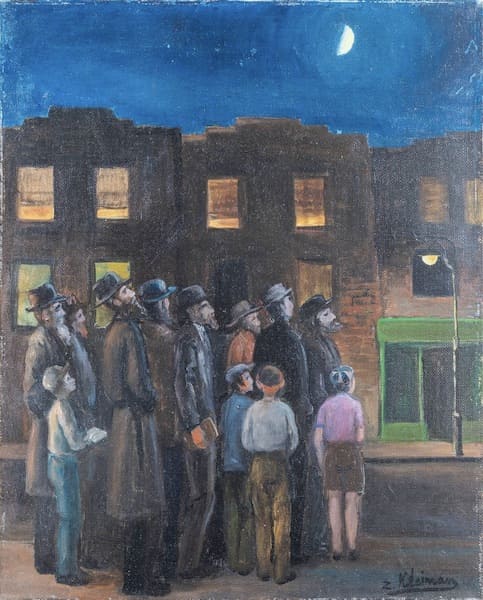
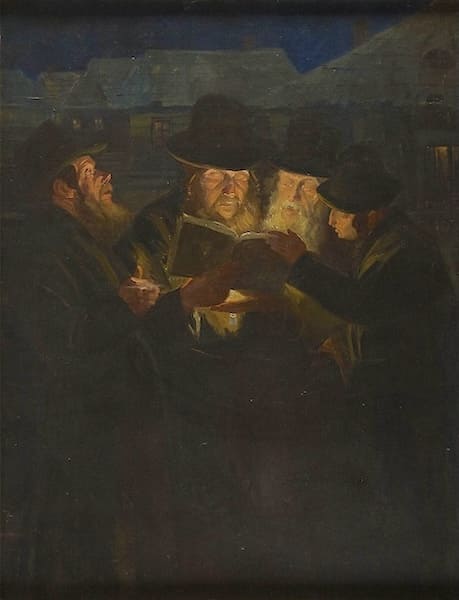
For modern Jewish artists, depictions of Blessing the New Moon became more abstract, sometimes focusing less on literal representation and more on evoking rhythm, light, and cyclical time—capturing the enduring resonance of this monthly blessing in Jewish life.
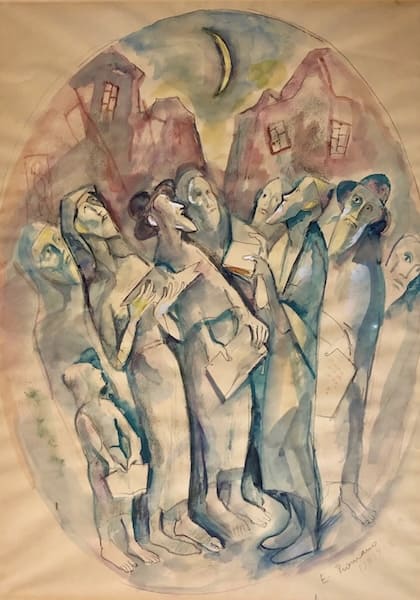
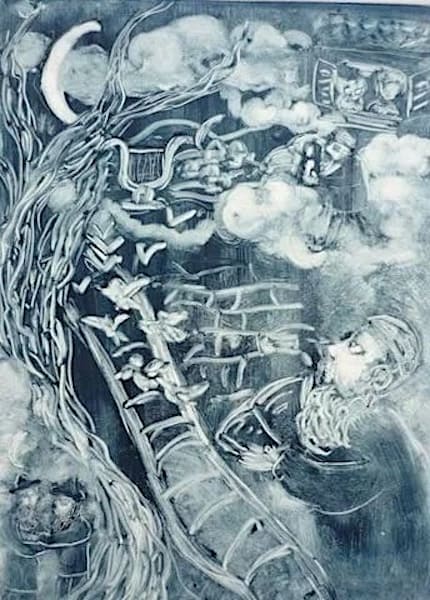
Conclusion
Kiddush Levana, the Jewish of Blessing the New Moon, holds profound spiritual and cultural significance, symbolizing renewal, hope, and the cyclical nature of life. Its representation in Jewish art serves as a powerful visual expression of these themes, offering a unique intersection between tradition and creativity.
Artists have captured, and continue to depict, the ritual’s beauty and spiritual depth through various mediums, from illuminated manuscripts, engravings, and woodcuts, to contemporary works. The enduring relevance of Kiddush Levana in both religious and artistic contexts remains to this day. By celebrating the new moon, Jewish art not only honors this sacred ritual but also invites viewers to reflect on the broader themes of renewal, faith, and the interconnectedness of the natural world with the divine.