Hidden beneath the dust of the Syrian desert for centuries, the Dura-Europos Synagogue emerged like a whispered miracle from the ancient world. When archaeologists uncovered its walls in the 1930s, they found something breathtaking: vibrant murals bursting with color, emotion, faith, and memory. The discovery forever changed the way scholars understood ancient Jewish art. Let’s explore the ancient Jewish art treasures of the Dura Europos Synagogue.

A Lost Masterpiece of Ancient Jewish Art in the Syrian Desert

The ancient city of Dura-Europos sat on the frontier of the Roman Empire during the 3rd century CE. It was a crossroads of cultures: Roman, Persian, Greek, and Semitic traditions all intertwined within its walls. Amid this vibrant cultural tapestry, a Jewish community created a synagogue with artwork unlike anything historians expected.
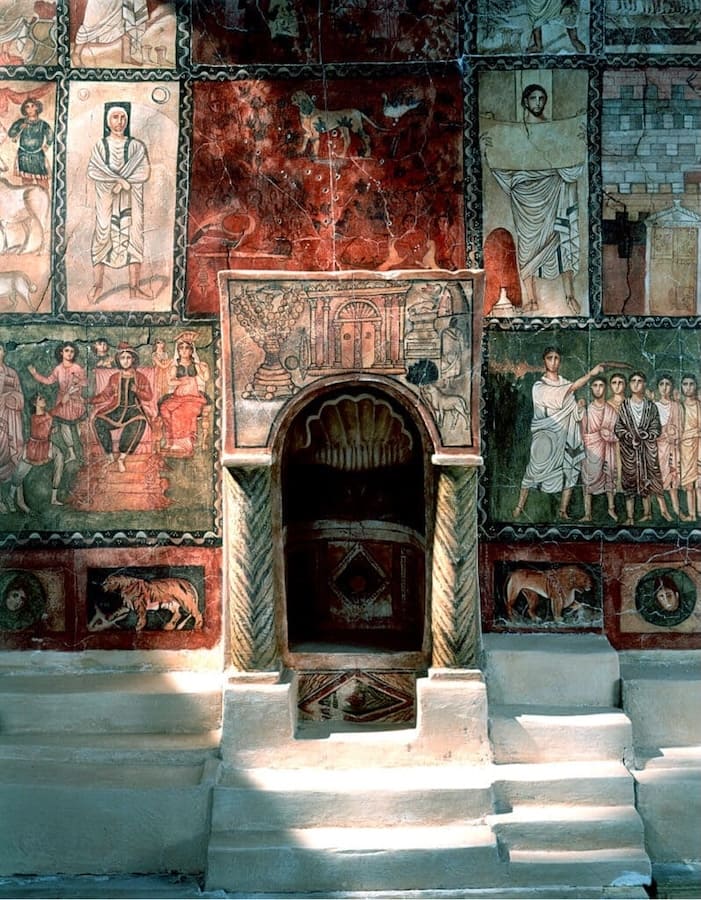
Inside, every surface exploded with imagery. Scenes from the Hebrew Bible stretched across the walls in rich reds, deep blues, gold tones, and earthy pigments. Moses parts the Red Sea, Ezekiel witnesses the valley of dry bones, Samuel anoints David, Queen Esther and Mordechai depict the Purim story. The paintings pulse with drama and spiritual intensity, transforming scripture into living theater.
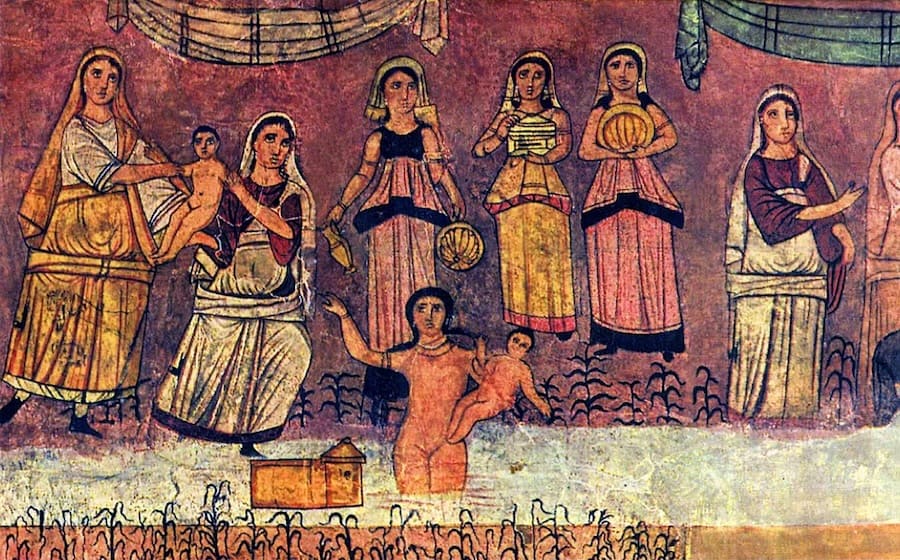
For scholars of antiquity, the discovery was emotionally staggering. The murals shattered long-held assumptions that Jewish communities avoided figurative imagery altogether. Instead, the synagogue revealed a thriving tradition of early Jewish art that was bold, expressive, and profoundly human.
The Emotional Power of the Artwork of the Dura Europos Synagogue
What makes the art of the Dura Europos Synagogue so unforgettable is its emotional power.
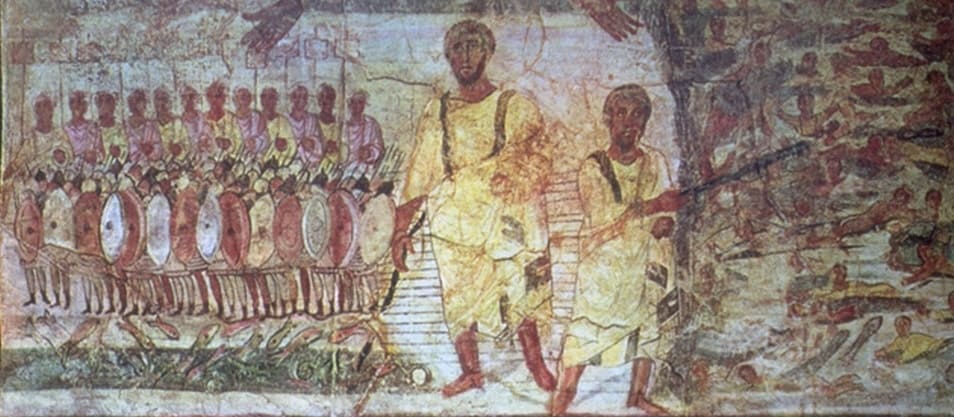
The figures are not distant symbols frozen in time. They are alive with urgency, fear, triumph, grief, and hope. Moses stands as a towering deliverer. The Israelites flee danger with desperate motion. Prophets gesture dramatically toward heaven as if speaking directly across the centuries. The theme of each segment of artwork was carefully chosen, providing a feeling of awe and hope.
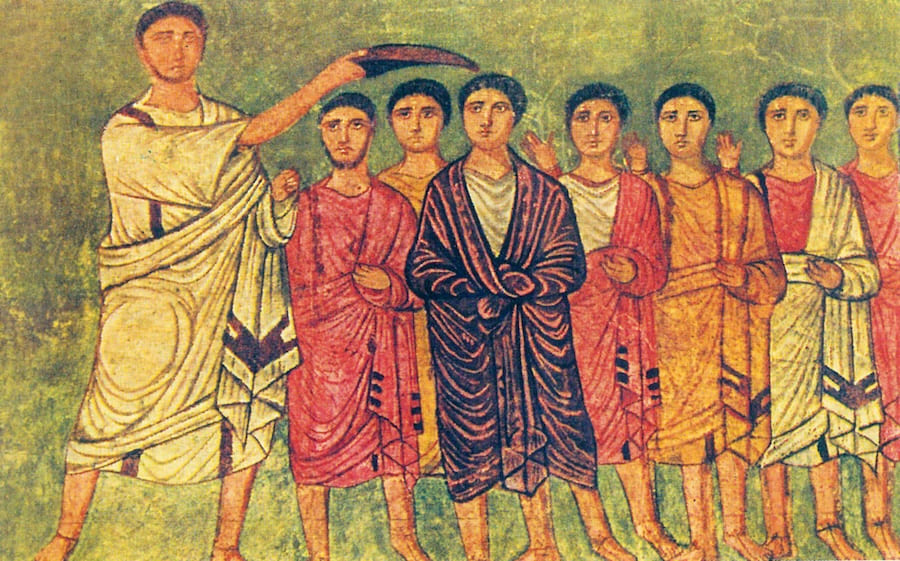
This was not decoration for decoration’s sake.The paintings were acts of faith.
For a Jewish community living on a dangerous military frontier, these stories carried immense emotional weight. They reminded worshippers that survival, exile, deliverance, and divine protection always shaped Jewish history. Every mural was a visual prayer — a declaration that even in uncertain times, Divine love and Jewish identity endured.
Because of that emotional resonance, the Dura Europos Synagogue remains a powerful symbol of ancient Jewish art.
A Revolutionary Discovery Surprising Ancient Art History Scholars
Before the discovery of the synagogue at Dura Europos, scholars believed early Judaism avoided large scale figurative imagery. But the synagogue paintings told a different story. Here was a Jewish house of worship filled with Biblical figures. Apparently, the Jewish community of the time embraced visual storytelling as a powerful form of religious expression.
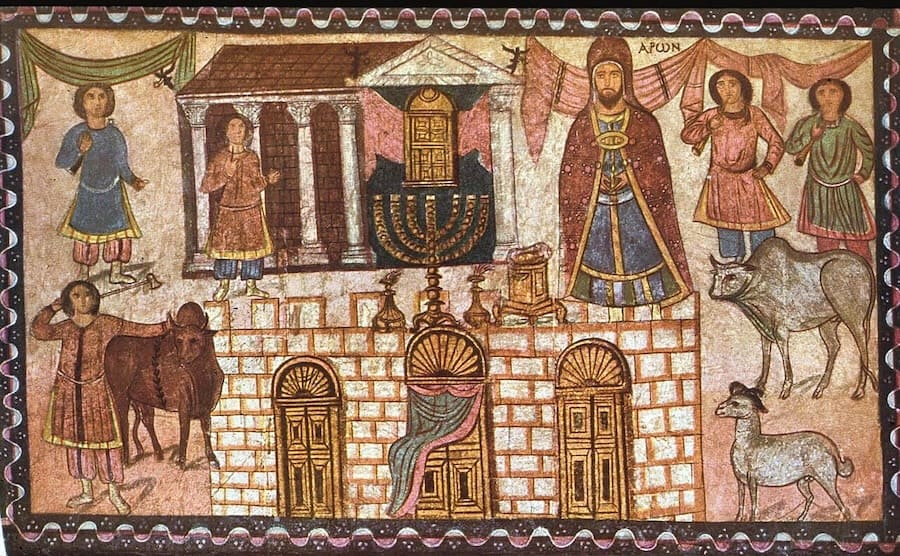
The artwork of the Dura Europos synagogue is essential for understanding the development of early religious art in the ancient world. The discovery revolutionized the study of early Jewish art history and had an impact on later European figurative art. Today, the synagogue stands as an important surviving example of ancient Jewish artwork anywhere in the world.
The Artistic Style of the Dura Europos Artwork
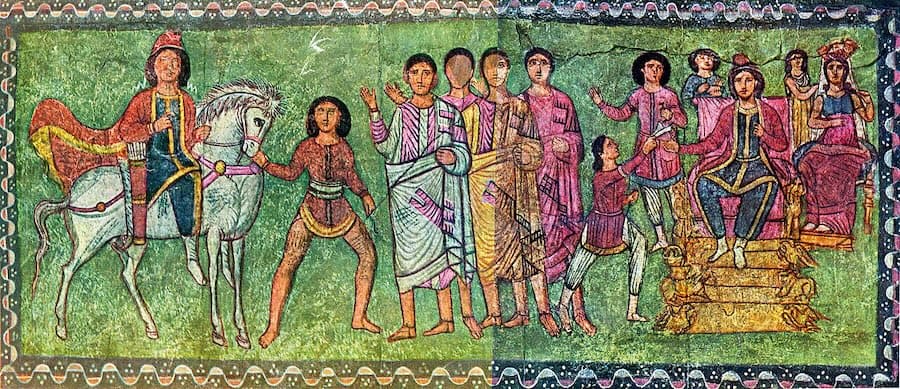
The artistic style of the Dura-Europos artwork reflects a strong influence from Greek and Roman art, particularly in its use of perspective, gesture, and architectural framing. The wall paintings organize biblical scenes within painted architectural settings, such as arches, columns, and decorative borders, which resemble the compositional structure of Roman frescoes.
Although the figures are somewhat flat and lack full naturalism, the artists attempted to create depth by overlapping forms and arranging figures in layered spaces. This technique is common in Greco-Roman painting. Perspective is also attained by making background figures smaller.
Gestures and body language are especially important. Dramatic poses and expressive hand movements guide the viewer through the narrative and emphasize emotion or authority. These stylistic elements connect the synagogue’s art to the broader visual culture of the Roman Empire, showing how Jewish artists adapted classical artistic conventions to communicate religious stories and reinforce communal identity.
Why the Ancient Jewish Art of the Dura Europos Synagogue Still Matters
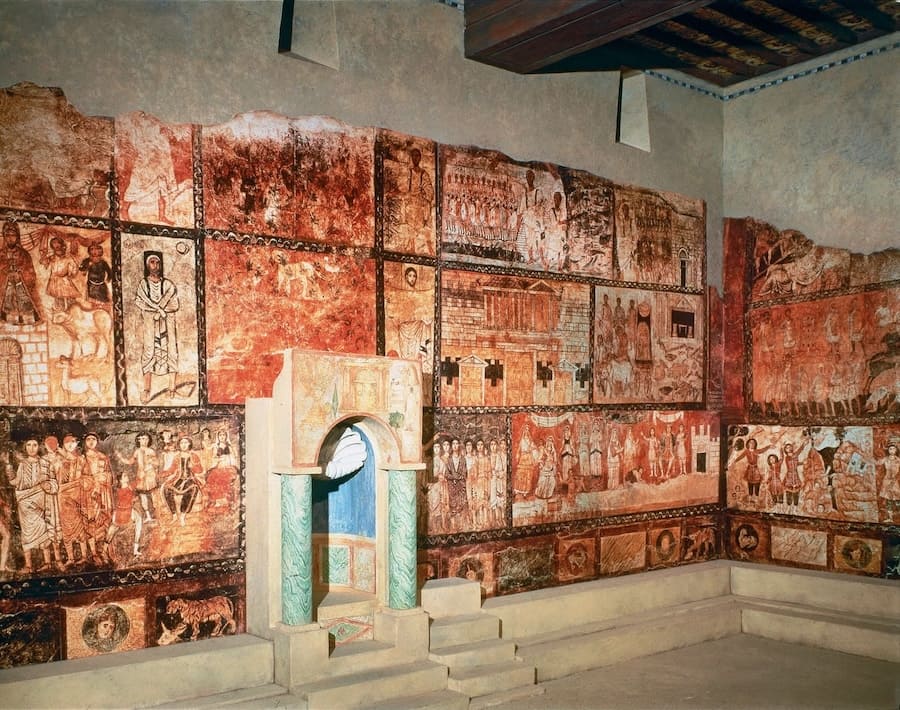
A masterpiece of ancient Jewish art, the Dura Europos Synagogue is far more than an archaeological discovery. It stands as an astonishing treasury of ancient Jewish art — a sacred space where color, storytelling, and devotion collided in spectacular fashion.
Its murals preserved the stories, beliefs, and artistic imagination of a Jewish community living nearly seventeen hundred years ago. Through vivid color, monumental figures, and dramatic biblical scenes, the artists transformed the synagogue of Dura Europos into a living visual expression of faith. These extraordinary paintings on silent walls reshape our understanding of Jewish art, ancient culture, and the power of sacred imagery.
And today, those silent walls still speak.
More on Jewish Art History – A Brief History of Jewish Art From Ancient to Modern Times