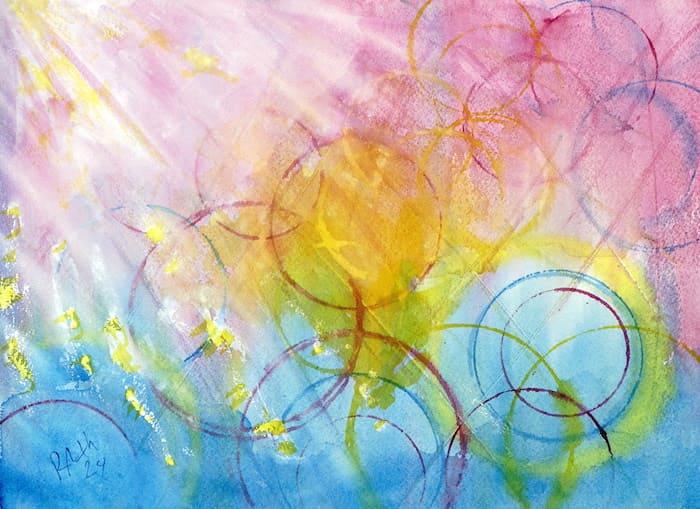
Vibrant color in Jewish art is not only exciting and aesthetic—it’s also deeply spiritual. Within the framework of Kabbalah, or Jewish mysticism, color is a language of Divine energy. When artists draw on these ideas, color symbolism expands beyond tradition into a realm of spiritual meaning. Exploring the relationship between color, Kabbalah, and Jewish art reveals a profound layer within the broader history of color and its expressive power.
The Origin of Spiritual Colors
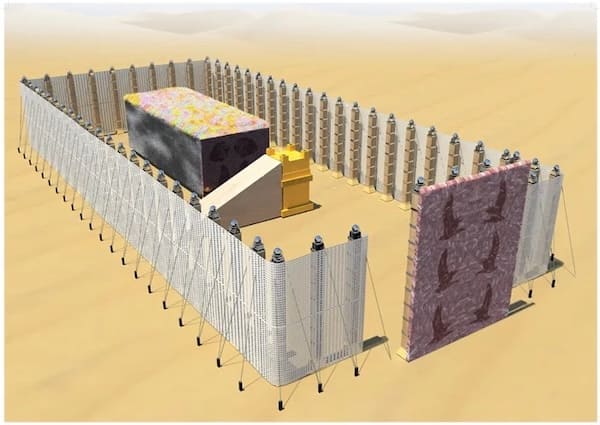
The Torah gives instructions for building the Mishkan (Tabernacle) and for making special clothing for Aaron and his sons (the Kohanim). A precise palette of colors was used making each item:
- gold (yellow)
- silver (white)
- purple (deep purple)
- copper (orange)
- scarlet (red)
- blue (sky blue)
In this color palette are the three primary colors (yellow, blue, red) and two secondary colors (orange, purple). And when these colors are combined, we have white. Clearly these hues aren’t random choices, but define spiritual concepts.
Kabbalah and the Symbolism of Divine Emanation
At the heart of Kabbalah is the concept of the Sefirot—ten divine attributes or emanations through which God interacts with the world. These are not physical entities but spiritual ones. In this mystical system, color reflects different aspects of divine energy and spiritual states.
Color and Kabbalah: the Meaning of the Colors of the Sefirot
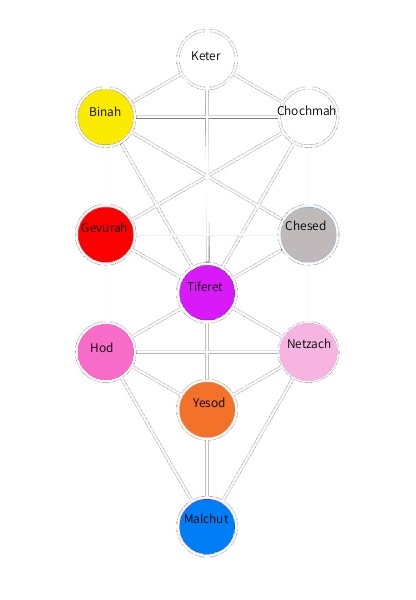
Kabbalah assigns specific colors to the Sefirot, creating a rich system of color meanings:
- Keter (Crown) – a blinding, invisible white, representing the infinity of the Creator
- Chochma (Wisdom) – white, a color including all the colors, the initial spark of of thought
- Binah (Understanding) – yellow or green, expansion of the initial spark of thought
- Chesed (Lovingkindness) – white or silver, expansive compassion
- Gevurah (Strength/Judgment) – red or gold, power and restraint
- Tiferet (Beauty/Harmony) – yellow or purple, balance and unity
- Netzach (Victory/Endurance) – light pink, active energy
- Hod (Splendor/Humility) – dark pink, focused energy
- Yesod (Foundation) – orange, transfers all energy to the last sefirah
- Malkhut (Kingship/Presence) – blue, receives the energy from the above sefirot and produces something tangible
The Colors Used in the Mishkan
Going back to the colors used in the Mishkan and for the clothes of the Kohanim we now associate each color with a purpose:
- Gold – the power of the Almighty
- Silver – His kindness in making Himself accessible through the physical
- Purple – all cosmic forces in unity and balance
- Orange – a firm foundation of belief and faith
- Red – a passion for Divine service
- Blue – acknowledging the Kingship of the Creator
Divine Light as Color: The Infinite and the Visible
In Kabbalah, Divine light (Or Ein Sof, the Infinite Light) is beyond human comprehension. Color emerges when this light is filtered through the Sefirot, becoming visible and differentiated.
This idea resonates strongly in Jewish art: color is not just pigment, but a manifestation of something hidden becoming revealed. Artists working within this tradition often treat color as a bridge between the infinite and the material world.
Color, Kabbalah, and Jewish Art: the Fusion of Spiritual and Physical
These color meanings are often layered, allowing a single artwork to operate on both visual and mystical levels. Jewish artists, while not strictly Kabbalists, often used vibrant, symbolic color in ways that echo mystical themes.
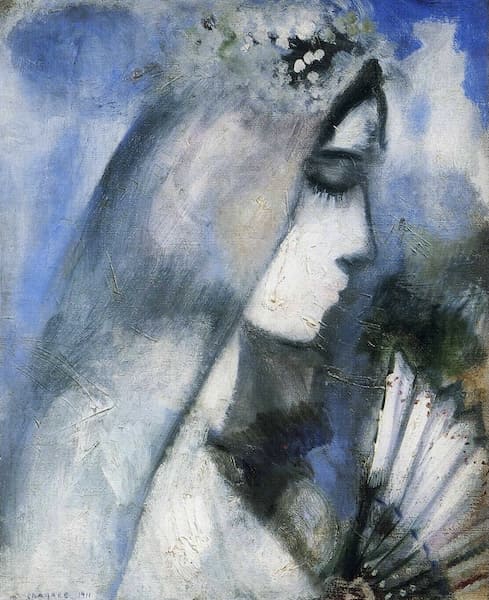
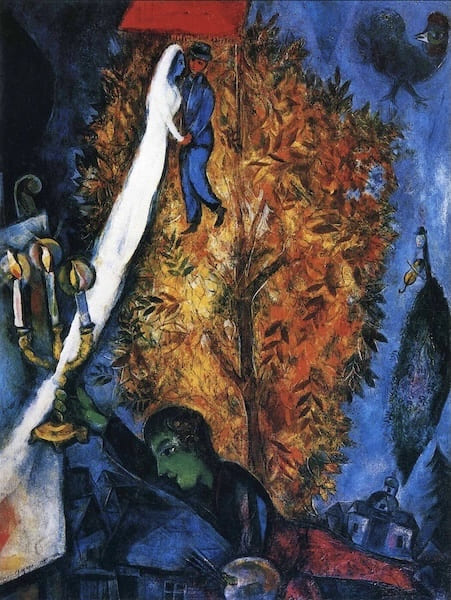
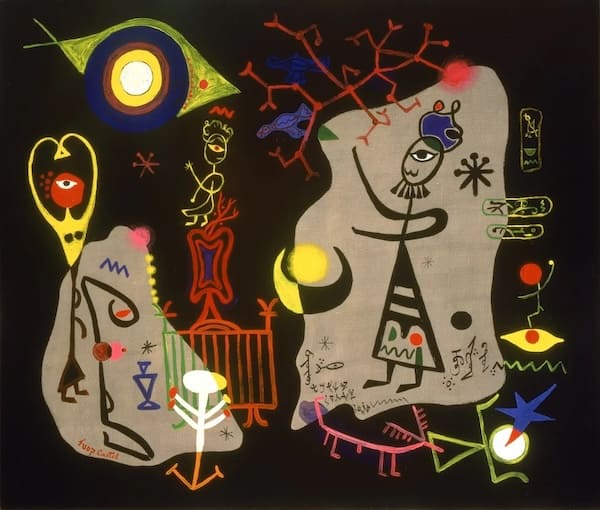
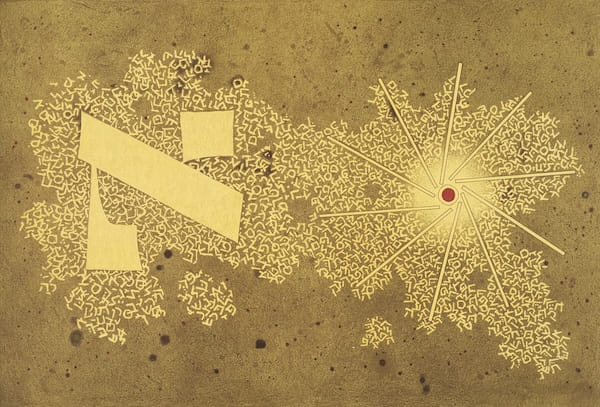
Here are examples of Jewish art that uses the colors of Kabbalah to tell a story and add excitement to the artwork:
Images Public Domain or Fair Use
Each of these paintings use the colors of the sefirot mentioned above. Noteworthy is Chagall’s work Bride With a Fan uses blue as the dominant color. The color for Malchut is blue, and this sefirah is associated with the feminine aspect of creation. Golden hues fill Ardon’s painting Alef. The color gold represents the Creator, as does the Hebrew letter Alef.
Color and the Tree of Life
In contemporary and mystical works of Jewish art, the Tree of Life diagram becomes a central visual motif.


Clockwise from left: The Kabbalah, Steve Kaufman, 2020, Tree of Life, Marina Pallares, 2012, The Heavenly Palaces, Anselm Kiefer, 2004. Images Public Domain or Fair Use.
Visualizing colors associated with the Sefirot is a means of spiritual contemplation. In these works, color symbolism becomes interactive—a tool for reflection rather than just observation.
Color, Kabbalah, and Jewish Art: the Influence on Contemporary Artistic Style
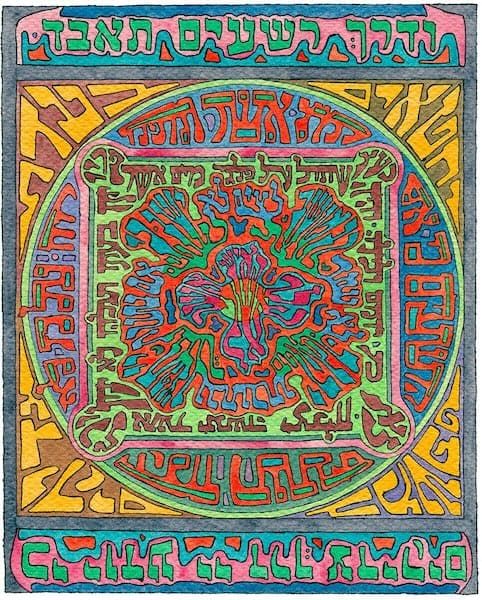
Today, Jewish artists revisit Kabbalistic colors and their meanings as a source of inspiration. The fusion of ancient mysticism with modern abstraction allows for new interpretations of the history of color in Jewish visual culture.
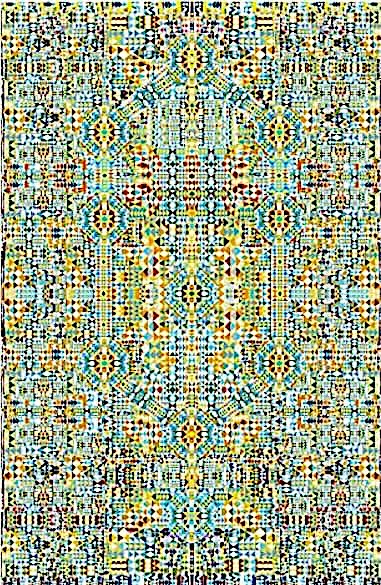
Contemporary works may not follow strict traditional color assignments, but they often retain the core idea: that color carries spiritual energy. This perspective aligns with broader movements in modern art that explore emotion, perception, and the unseen.
Color as a Spiritual Experience
In the intersection of Kabbalah and Jewish art, color is more than symbolic—it is experiential. It invites the viewer to engage not only visually but spiritually, to sense meaning beyond form.
This approach transforms the act of viewing art into a contemplative practice. The use of color becomes a way to access deeper layers of consciousness, echoing the Kabbalistic goal of understanding the divine structure of reality.
Conclusion
The relationship between color, Kabbalah, and Jewish art reveals a profound dimension of color symbolism rooted in mysticism and meaning. Through the lens of Kabbalah, color meanings are not fixed but dynamic expressions of divine energy. By exploring this connection, we gain a deeper appreciation for how the history of color in Jewish art extends beyond the visible—into the spiritual, the symbolic, and the infinite.