Women Artists, Abstract Expressionism, and the Rise of Modern Art
The story of the New York School is told through the names of Jackson Pollock, Willem de Kooning, and Mark Rothko. Yet the rise of Abstract Expressionism and the transformation of Modern Art in postwar America would not have been possible without the groundbreaking contributions of the women artists of the New York School.
These women artists were innovators, intellectual leaders, and bold experimenters. They shaped the visual language of Abstract Expressionism and played a central role in establishing New York as the global capital of Modern Art.
New York School: A Revolutionary Movement in Modern Art
In the years following World War II, a loose circle of bold, argumentative, and ambitious artists gathered in downtown Manhattan and changed the course of modern art. Known as the New York School, these painters, poets, and thinkers rejected tradition, embraced experimentation, and helped shift the art world’s center from Paris to New York. And some of these talented artists were women.
Who Were the Women Artists of the New York School?
Lee Krasner: A Pioneering Abstract Painter
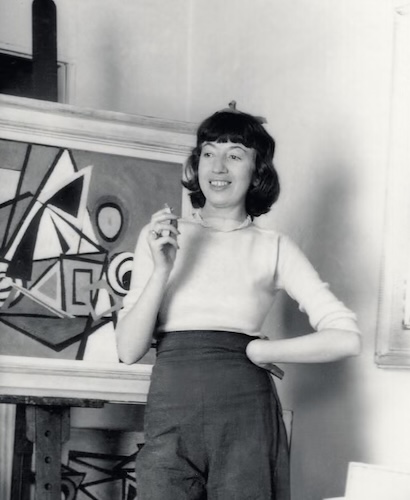
Lee Krasner (1908–1984) was a pioneering American abstract painter and a central figure in the development of Abstract Expressionism. Known for her fierce intelligence, restless experimentation, and powerful, gestural compositions, Krasner played a vital role in shaping the New York School.


From top left, clockwise: Bald Eagle,1955 , Shellflower,1947 , Blue Stone,1969 , The Guardian,1960 , Untitled, 1941 , Through Blue,1963
Though overshadowed during her lifetime by her husband, Jackson Pollock, Krasner forged a bold and independent artistic voice, continually reinventing her style over five decades and leaving a lasting mark on modern art. Her paintings evolved dramatically over time—from tightly structured compositions to sweeping, gestural canvases—demonstrating her relentless artistic reinvention.
Elaine de Kooning: Bridging Figuration and Abstract Expressionism
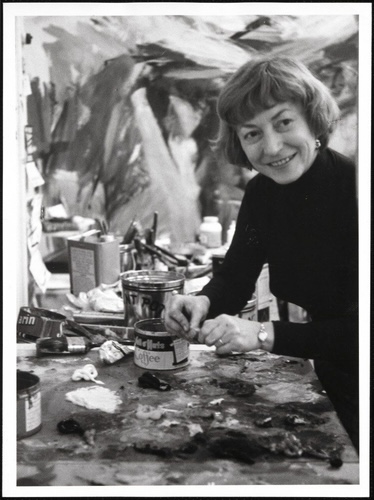
Elaine de Kooning (1918–1989) was an influential American painter, critic, and educator associated with the New York School of Abstract Expressionism. Known for her energetic brushwork and dynamic portraits, she moved fluidly between abstraction and figuration at a time when many artists felt pressured to choose sides.


From top left, clockwise: Bullfight,1960 , Self Portrait,1946 , Untitled,1958 , Untitled,1965 , Spring,1965 , Italian Summer 2,1970
Married to New York School artist Willem de Kooning, she was a vital voice in the mid-century art world. Through her writing and advocacy, she elevated the visibility of fellow artists while advancing the intellectual foundations of Modern Art in America.
Joan Mitchell: Action Painting in the New York School
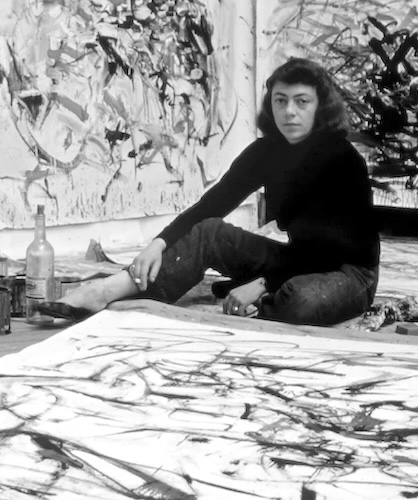
Joan Mitchell (1925–1992) was a leading figure of the New York School and one of the most important women artists in Abstract Expressionism. She was known for her bold brushwork, vibrant color, and sweeping, gestural compositions. Known as Action Painting, Mitchell utilized dripping paint and splattering to create powerful abstract paintings evoking landscape, memory, and emotion.


From top left, clockwise: City Landscape,1955 , Hemlock,1956 , Sunflowers,1991 , Untitled,1951 , Untitled,1950 , Ladybug,1957
Although associated with the predominantly male circle of Abstract Expressionist painters, Mitchell forged a fiercely independent path, dividing her career between New York and France. Her large-scale canvases pulse with energy, blending the physicality of action painting with a deep sensitivity to light, space, and nature. Today, Joan Mitchell is celebrated as a central figure in Modern Art whose work continues to influence contemporary abstraction.
Helen Frankenthaler: Expanding Abstract Expressionism into Color Field Painting
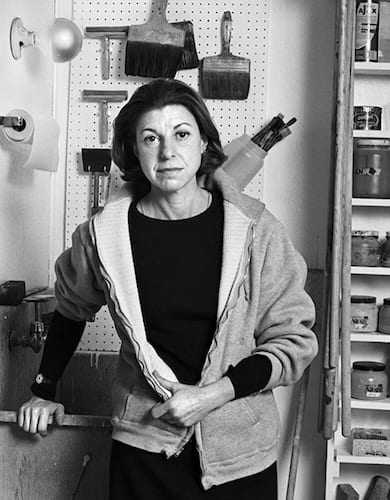
Helen Frankenthaler (1928–2011) was a pioneering American artist whose innovations helped shape postwar Abstract Expressionism and Color Field painting. Best known for her groundbreaking soak-stain technique, Frankenthaler poured thinned paint directly onto unprimed canvas, allowing color to flow and merge organically with the surface.


From top left, clockwise: Still Life,1948 , Large Abstract Still Life,1951 , Italian Beach,1960 , Tutti Fruitti,1956 , Round Trip,1957 , Mountains and Sea,1952 ,
Her luminous, atmospheric compositions bridged the gestural intensity of the New York School with a new emphasis on expansive color and openness. Through her bold experimentation and refined sense of composition, Frankenthaler became one of the most influential figures in Modern Art, inspiring generations of painters who followed.
Grace Hartigan: Reimagining the Boundaries of Modern Art
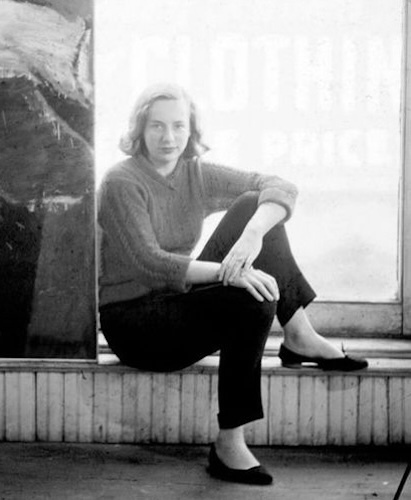
Grace Hartigan (1922–2008) was a dynamic figure in the New York School of Abstract Expressionism, known for blending bold abstraction with recognizable imagery. Emerging in the 1950s New York art scene, Hartigan gained early acclaim for her gestural brushwork, vivid color, and emotionally charged compositions.


From top left clockwise: East Side Sunday,1956 , Shinnecock Canal,1957 , Variations 1 Clark’s Cove,1962 , Summer Street,1956 , Ireland,1958 , Modern Cycle,1957
Unlike many of her peers, she often incorporated elements of everyday life, literature, and art history into her abstract paintings, creating works that were both expressive and richly layered with meaning. Through her fearless experimentation and strong artistic voice, Grace Hartigan secured her place as one of the most significant women artists of the Abstract Expressionist movement.
Perle Fine: Structure, Abstraction, and the Intellectual Core of the New York School
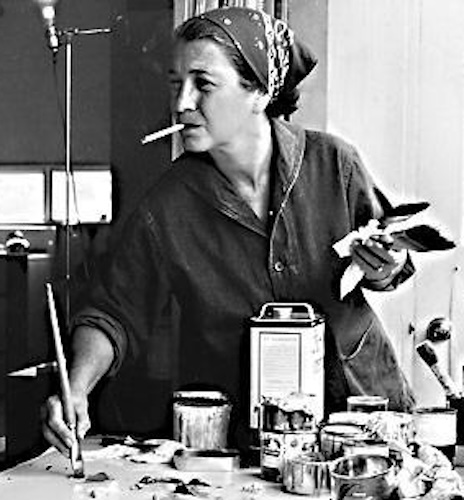
Perle Fine (1905–1988) was an influential member of the New York School and a key figure in Abstract Expressionism. Known for her refined sense of structure and color, Fine moved fluidly between gestural abstraction and more geometric compositions throughout her career.


From top left clockwise: Blue Chip Blue 1,1974 , Cool Series 1 Red over White,1963 , Untitled (Prescience Series),1952 , Timelessness 2,1974 , Summer Studio 2,1948 , Ideomorphic Composition1,1942
As one of the few women included in the influential 1951 “Ninth Street Show,” she earned recognition among her peers while forging an independent artistic path. Fine’s paintings balance expressive brushwork with disciplined composition, reflecting her deep engagement with modernist ideas. Today, she is recognized as an important contributor to Modern Art and to the legacy of women artists in the New York School.
The Role of Women Artists in Abstract Expressionism
The women artists of the New York School worked in a male-dominated art world that often marginalized their achievements. Critics frequently framed them through personal relationships rather than artistic innovation.
Despite these challenges, these women artists:
- Helped define the visual language of Abstract Expressionism
- Contributed to the global rise of the New York School
- Advanced the intellectual discourse of Modern Art
- Expanded abstraction through experimentation with color, gesture, and scale
Today museums, art critics, and scholars recognize that women artists of the New York School were not peripheral figures. They were central contributors to Abstract Expressionism and the development of Modern Art.
Rewriting the History of the New York School
Understanding the women artists of the New York School reshapes our perception of Abstract Expressionism. These artists were not simply participants—they were innovators who influenced the direction of Modern Art in profound ways.
By acknowledging the full range of voices within the New York School, we gain a richer, more accurate history of Abstract Expressionism – one that recognizes the essential contributions of women artists and their lasting impact on Modern Art.