
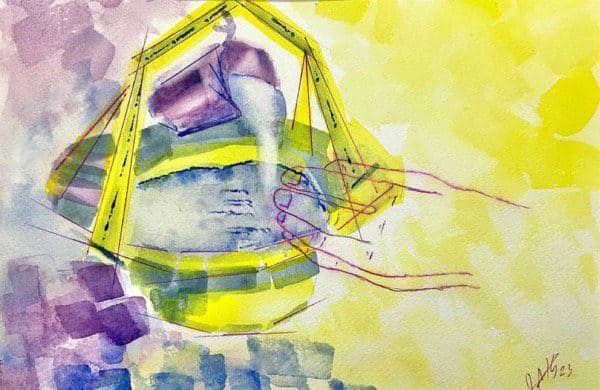
Mayim Acharonim, Hebrew words which translate to ‘after waters’, is a ritual washing performed after a meal, particularly following the consumption of bread. The act involves pouring water over the fingers, often from a beautifully designed vessel. Let’s look at the historical origin of the Mayim Acharonim, and explore classic to modern designs of this unique item of Judaica art.
Historical Origin of the Mayim Acharonim Ritual
The historical origin of the Mayim Acharonim ritual goes back to Talmudic times. Initially, washing the fingers after a meal was instituted due to concerns about melach sedomit, translated as Sodomite salt. This type of salt, served at meals, was believed to cause blindness if it touched the eyes. Hence, the importance of washing the hands after a meal.
Although the practice of using melach sedomit at meals disappeared ages ago, the ritual of washing evolved into a symbolic act of spiritual cleansing. However, there is a halachic reason to maintain the custom, as it is mandatory to have clean hands before saying a blessing, such as the Grace after meals (Birkat HaMazon). ( see the article Tzarich Iyun: Mayim Achronim, by Rabbi Ari Zivotofsky )
Exploring Classic and Modern Designs
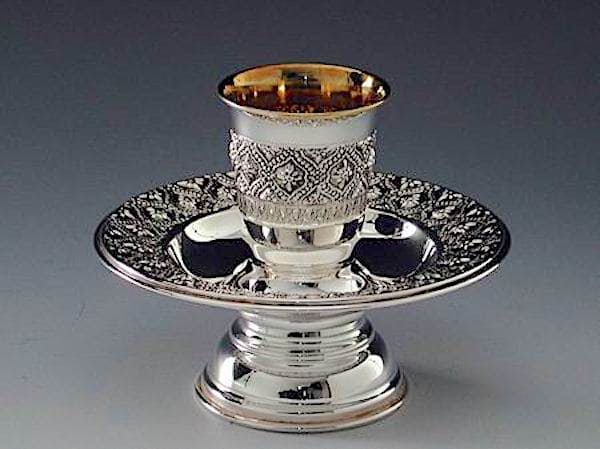
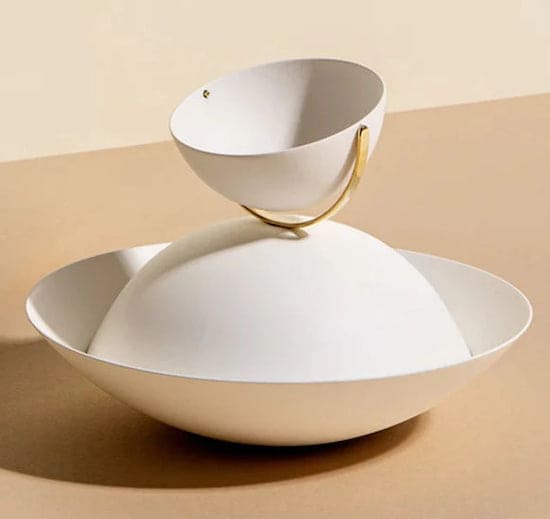
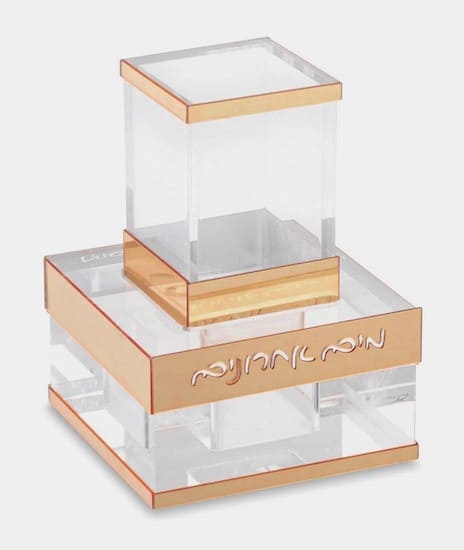
Common to every design of the Mayim Acharonim is a bowl for collecting water and a small pouring cup. There are two types of configurations – a cup resting on the bowl itself; or a small pitcher hanging from a handle on the Mayim Acharonim.

Craftsmanship and Material
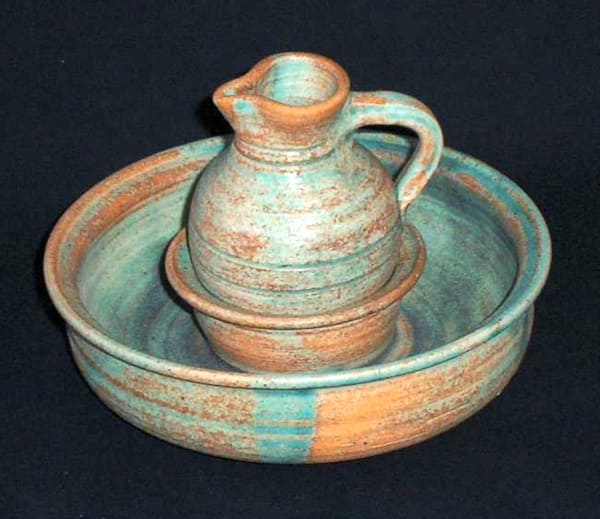
Mayim Acharonim vessels are made from high-quality materials such as glass, metal, silver, silver plated metal, or ceramic. Jewish artists employ traditional techniques, such as hand-blown glass, hand-painted ceramics, and intricate designs in metal resulting in unique, one-of-a-kind pieces. The attention to detail in these designs is what makes them so special.
The Designs of the Mayim Acharonim – From Classic to Modern
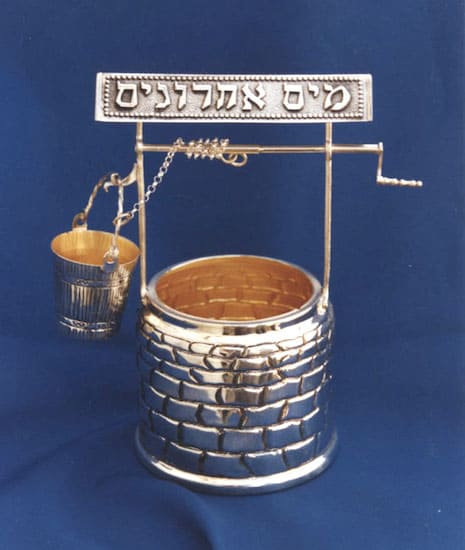
While many Mayim Acharonim designs honor traditional aesthetics, there is a rise in modern interpretations that blend contemporary art with classic elements. Judaica artists today are pushing the boundaries, incorporating minimalist designs and new materials.
Conclusion
Today, the innovative designs of the Mayim Acharonim are a testimony to Halachic significance, aesthetic appeal, and functional art. Unique designs feature intricate patterns and beautiful materials, adding an artistic touch to a spiritual practice. However, Mayim Acharonim vessels are not just decorative. Designed for practical use, they enhance the ritual experience while being functional.